Category: Nezařazené
-
Support for Ukrainian Students: Assistance, Employment Opportunities at KVUH, and Initiatives Supporting Ukraine
Iryna Naumenko
This lecture looks at the situation of Ukrainian students in the Czech Republic after the war started. The introduction covers current events in Ukraine. It then describes the main challenges these students face, such as stress, uncertainty, and language or academic barriers. Finally, it highlights the support and solidarity offered by the faculty and other students.
-
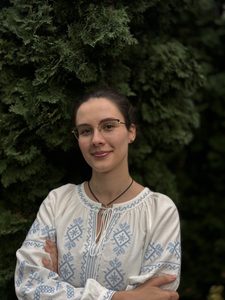
Iryna Naumenko
Iryna Naumenko is a 6th-year medical student at the Third Faculty of Medicine, Charles University (3LF UK). Following the outbreak of the full-scale Russian invasion of Ukraine, she volunteered with the Iniciativa Hlavák during the first months of the war. She also joined Pražská Kryjivka (Úkryt), where she helps make camouflage netting and adaptive clothing for soldiers. Additionally, Iryna is a teacher and volunteer at Teach for Ukraine, an organization dedicated to helping children from frontline regions overcome educational loss. She also regularly organizes fundraising campaigns to support various units of the Ukrainian Armed Forces.
-
Establishing Ukraine’s First Pediatric Burn Centre: From an Unmet Clinical Need to a Sustainable Model of Care
Rebecca Pohle, Clemens Schiestl, Ingo Königs, Wera Wendenburg, Jost Kaufmann, Iris Steugck, Daniel Acero Moreno, Tobias Klein
Background:
Severe burn injuries in children require highly specialized, multidisciplinary care that differs from adult burn management. In addition to acute surgical treatment, pediatric burn care encompasses age-specific anaesthesia and intensive care, specialized nursing, rehabilitation, pain management, psychological support, and family-centered care. In Ukraine, dedicated pediatric burn services have not yet been structurally established; severely burned children are primarily treated in burn centers designed for adults.Project:
Supported by the German GIZ, the first specialized center for severely burn-injured children is currently being established at a leading pediatric hospital in Kyiv. The aim is to develop a comprehensive interdisciplinary service based on international standards while adapting treatment pathways, protocols, and training to local infrastructure, resources, and healthcare needs. The long-term goal is sustainable integration into the Ukrainian healthcare system.Clinical experience and rationale:
Our institution has previously treated several Ukrainian children with severe burn injuries. These cases have provided direct insight into the considerable medical, psychological, and social burden of months of complex treatment far from home. Beyond the physical consequences of severe burns, we have witnessed the challenges faced by children and their families when prolonged treatment takes place in an unfamiliar country, separated from their usual environment, language, healthcare system, and social support. This experience has reinforced the importance of strengthening specialized pediatric burn care within Ukraine.Implementation and outlook:
The presentation will describe the stepwise development of the center, focusing on staff training, interdisciplinary team building, implementation of standardized treatment pathways, and adaptation of international pediatric burn standards to the local context. Initial experiences, challenges, and opportunities for sustainable development and future expansion will be discussed. The project aims to establish a locally anchored model of care that enables children with severe burns to receive complex treatment closer to their families and home environment. -
Dr Rebecca Pohle
Dr Rebecca Pohle has been working at the Children’s Hospital Cologne since 2006. She completed her specialist training in paediatric surgery in 2012, was appointed Consultant Paediatric Surgeon in 2016, and has served as Head of the Paediatric Burn Centre since February 2023. Her professional focus is the care of children with severe burn injuries, and she is actively involved in international collaboration and development projects in the field of burn medicine.
-
Eye Tissue Bank of Kralovske Vinohrady University Hospital (KVUH)
MUDr. Magdaléna Netuková, PhD, Department of Ophthalmology and Eye Tissue Bank, KVUH and Third Faculty of Medicine, Charles University
The Eye Tissue Bank (ETB) of Královské Vinohrady University Hospital (KVUH) began its activities in November 1991 and is the oldest eye tissue bank in the Czech Republic. Its primary mission is to ensure an adequate supply of safe and high-quality tissues for transplantation. Since its establishment, the ETB has distributed more than 20,000 ocular tissues to recipients. The main tissues provided include human corneas, sclerae, and amniotic membranes. The tissue portfolio continues to expand in line with modern trends in ophthalmic surgery. Since 2010, the ETB has also prepared corneal grafts for posterior lamellar keratoplasty. Since 2020, cadaveric dermoepidermal grafts have become part of the bank’s portfolio. These tissues are used exclusively by the Department of Burns Medicine at KVUH. To date, more than 280,000 cm² of this valuable tissue have been provided for the treatment of severely burned patients. Since its inception, the ETB has also served as a training centre of the International Federation of Eye and Tissue Banks (IFETB), a non-profit organization supporting the development of eye banking worldwide. More than 200 trainees from across the globe have completed training programmes at the ETB. Last year, the ETB hosted a one-week training programme attended by a physician and a laboratory specialist from tissue establishments in Lviv, Ukraine: the 1st Territorial Medical Association of the City of Lviv and the Multispecialty Clinical Hospital of Intensive Care and Medical Assistance. The aim of the training was to enhance expertise in the procurement, testing, and processing of human ocular and skin tissues. The programme significantly expanded both the theoretical knowledge and practical skills of the participants. Their stay at the KVUH Eye Tissue Bank contributed to the establishment of tissue banking activities in Lviv, helping to secure much-needed ocular and skin tissues for patients in Ukraine. The Eye Tissue Bank is also actively engaged in research. Currently, seven PhD research projects are linked to the ETB. These projects focus primarily on the potential use of alternative human tissues as substitutes for cadaveric corneas. Additional research explores novel applications for human tissues that are unsuitable for conventional transplantation. Furthermore, ongoing studies investigate genetic testing of ocular tissue donors with the aim of improving the quality and safety of tissues intended for transplantation.
-
MUDr. Magdaléna Netuková, PhD
MUDr. Magdaléna Netuková, PhD is a Czech ophthalmologist specializing in diseases of the anterior segment of the eye, particularly corneal disorders. Throughout her professional career, her work has focused on the field of human corneal transplantation. She currently serves as Head of the Eye Tissue Bank at Královské Vinohrady University Hospital (KVUH) and as an Assistant Professor at the Third Faculty of Medicine, Charles University.
Dr. Netuková graduated from the First Faculty of Medicine, Charles University, and subsequently earned her PhD in the Experimental Surgery programme at the Third Faculty of Medicine, Charles University. Her doctoral research focused on the recipient immune response following corneal transplantation.
Her professional career has also included extensive international experience, including a three-year appointment at the Institute of Medical Sciences, University of Aberdeen, Scotland, as well as specialist training placements at renowned institutions such as the Johns Hopkins Wilmer Eye Institute in the United States and the NIIOS Melles Cornea Clinic in the Netherlands.
Dr. Netuková’s scientific work is dedicated to ophthalmic research, as demonstrated by her authorship of dozens of peer-reviewed scientific publications and her involvement in numerous successful research grants. Her innovative approach is further reflected in her co-authorship of a utility model for a layered nanofibrous carrier system.
As a supervisor of postgraduate students, she actively contributes to the education and training of the next generation of specialists in experimental surgery and preventive medicine. She is a respected member of professional organizations, including the European Society of Cataract and Refractive Surgeons (ESCRS) and the European Eye Bank Association (EEBA). In recognition of her achievements, she has received several prestigious awards, including the Josef Hlávka Award for postgraduate studies in biomedicine.
-
The Psychological Impact of War and Pathways to Recovery: The Ukrainian Experience
Prof. Jiří Horáček, MD, PhD, FCMA
The lecture will focus on the psychological and psychiatric consequences of war-related experiences. It will begin with an introduction to the basic theory of psychological trauma and the mechanisms through which extreme stress affects human experience, emotions, cognition, and behaviour. The presentation will then discuss the most common diagnoses associated with traumatic experiences, particularly acute stress reactions, post-traumatic stress disorder (PTSD), and adjustment disorders. Practical examples from clinical practice and support provided to individuals affected by the war in Ukraine will also be presented.
-
Prof. Jiří Horáček, MD, PhD, FCMA
Prof. Jiří Horáček, MD, PhD, FCMA is Director of the National Institute of Mental Health (NIMH), Head of the Department of Psychiatry and Medical Psychology at the Third Faculty of Medicine, Charles University, and Director of the NIMH Centre for Advanced Studies of Brain and Consciousness. He works as a researcher, psychiatrist, and psychotherapist. His research activities include the study of the mechanisms of action of antipsychotic medications, the theory of consciousness, animal models of schizophrenia, and innovative treatment approaches for depression and existential distress in oncology and palliative care patients. He is the editor of several books and the author of more than 200 scientific publications. In Ukraine, he leads a project focused on innovative therapeutic approaches for the treatment of post-traumatic stress disorder (PTSD).
-
Reconstruction of Residual Limbs after Combat Injury
Assoc. Prof. Dr. Ihor Stoianovskyi
The presentation “Reconstruction of Residual Limbs after Combat Injury” focuses on the surgical management of complicated residual limbs that are not ready for prosthetic fitting because of insufficient length, unfavourable shape, inadequate or scarred soft-tissue coverage, symptomatic neuromas, heterotopic ossification, bone spurs, persistent infection, or osteomyelitis.
Using clinical cases from Superhumans Center, including procedures performed in cooperation with the Czech MEDEVAC team, the presentation demonstrates revision surgery, treatment of neuromas and skeletal complications, and reconstruction with local and free flaps. It highlights how preservation of residual-limb length and restoration of durable soft-tissue coverage can create the conditions required for successful prosthetic rehabilitation.
The central message is that reconstructive surgery should be considered an integral part of modern amputation care. Early cooperation between the reconstructive surgeon, prosthetist, rehabilitation specialist, and the patient is essential for achieving the best possible functional outcome.