Assoc. Prof. Dr. Ihor Stoianovskyi
Author: Hana Stastna
-
Assoc. Prof. Dr. Ihor Stoianovskyi
Ihor Stoianovskyi is an Associate Professor at the Department of Surgery No. 1 and Head of the Department of Reconstructive and Plastic Surgery at the University Hospital of Danylo Halytsky Lviv National Medical University. He also works as a reconstructive surgeon at Superhumans Center in Lviv, Ukraine.
He graduated from Danylo Halytsky Lviv National Medical University in 1996 and completed his postgraduate training in surgery in 1999. In 1997, he undertook additional surgical training at the University Hospital in Plzeň, Czech Republic, affiliated with Charles University. In 2002, he earned the Ukrainian Candidate of Medical Sciences degree, equivalent to a PhD, after defending his dissertation entitled “Intraoperative Prevention of Occupational HIV Infection in Surgeons.”
Throughout his professional career, Dr Stoianovskyi has worked in hospitals in Lviv as a surgeon, head of a surgical department, and medical director. His clinical experience encompasses general surgery, burn surgery, management of polytrauma, hand surgery, reconstructive surgery, and reconstructive microsurgery. Since 2002, he has also been actively involved in undergraduate and postgraduate medical education at Danylo Halytsky Lviv National Medical University.
Since the beginning of Russia’s full-scale invasion of Ukraine in 2022, he has devoted his clinical practice to treating the consequences of war-related injuries in both military personnel and civilians. He has repeatedly participated in complex joint reconstructive procedures together with colleagues from the Czech MEDEVAC programme and collaborates with European reconstructive surgical teams.
A major focus of his current clinical and academic work is the reconstruction of complex combat-related extremity injuries and complicated residual limbs. This includes restoration of reliable soft-tissue coverage, preservation of residual-limb length, treatment of symptomatic neuromas and infectious complications, and surgical preparation for successful prosthetic rehabilitation.
-
Beyond the Frontlines: Surgery for Hope and Humanity
prof. MUDr. Břetislav Lipový, Ph.D. et Ph.D., MBA, LL.M., FICS
Lipový B.1, Kempný T,2. Holoubek J.3, Votruba T.4, Smejkal P.5
1 Department of Burns Medicine, Kralovske Vinohrady University Hospital and Third Faculty of Medicine, Charles University, Prague, Czech Republic
2 MEDICent Clinic, Ostrava, Czech Republic
3 Department of Traumatology, Faculty of Medicine, Masaryk University, Brno, Czech Republic
4 Department of Plastic Surgery, Hospital Ceske Budejovice, České Budějovice 1, Czech Republic
5 Institute of Hygiene and Epidemiology, First Faculty of Medicine, Charles University, Prague, Czech RepublicThis presentation goes beyond the surgical challenges of war. It reflects our experience in Ukraine, where burn care, reconstructive surgery, and microsurgery are performed in an environment increasingly shaped by multidrug-resistant pathogens. The daily confrontation with antimicrobial resistance is fundamentally changing the rules of infection management and, in many cases, directly influences the possibilities and outcomes of complex reconstruction.
Alongside our surgical activities, we therefore focus on the development and translation of novel antimicrobial strategies, particularly for topical treatment of wounds infected or colonized by resistant bacteria. Our long-term research explores alternative antimicrobial agents and their combinations, together with innovative delivery platforms designed to bring effective therapy directly to the site of infection.
Building on our clinical experience in Ukraine, we also aim to establish a unique collection of clinically relevant resistant pathogens isolated from complex war-related wounds. This collection will provide a preclinical platform for testing novel antimicrobial agents and their combinations, with the ultimate goal of identifying effective strategies against pathogens for which conventional antibiotics are increasingly failing.
-
Charleston Programme: Second Call for Postdoctoral Fellowship Applicants Now Open
Charles University (CU) has launched the second call for applicants within the Charleston programme, co-funded by the European Commission’s MSCA COFUND initiative (Horizon Europe). This call will support a maximum of 12 postdoctoral researchers, who will carry out their projects at the university for 24 months and undertake a 3- to 6-month secondment in a non-academic institution. Researchers can submit their applications until 1 June 2026 2 PM (Prague time).
The programme is based on three pillars:
• Contributing to the UN Sustainable Development Goals (UN SDGs),.
• Enhancing career development support for postdoctoral researchers, and
• Providing fellows with valuable intersectoral experience through compulsory non-academic secondments.How to apply
Applications must be submitted via the IS Věda portal. Please register in the portal first using this link.
The call is open from 2 March to 1 June 2026, 2 PM (Prague time).
The information and documents necessary for submitting the application include:
– Guide for Applicants
– User Manual for Submitting Online Application Form (Annex I of the Guide for Applicants)
– Part B1 Template – Proposed Project Description (Annex II of the Guide for Applicants)
– Part B2 Template – Ethics Issues Table (Annex III of the Guide for Applicants)
– Letter of Commitment – Non-Academic Institutions (Annex IV of the Guide for Applicants)
– Definitions of Terms for Completing Project Description (Annex V of the Guide for Applicants)
– Frequently Asked QuestionsWho can apply
The CHARLESTON programme supports projects focused on sustainable development and societal impact in line with the UN Sustainable Development Goals.
Applicants must not be employees of Charles University at the time of the application deadline and must not have resided in the Czech Republic for more than 12 months within the past 36 months (mobility rule). They must also hold a Ph.D. degree obtained no more than 8 years ago. Exceptions apply, such as parental leave etc.
Charles University is committed to fostering gender equality in research and strongly encourages women to apply.
Scientists at risk are encouraged to apply.
Research projects can be carried out at any faculty or unit of Charles University.
For more details, please visit the programme’s website and refer to the Guide for Applicants.
All funded projects must start within the period from 1 November 2026 to 1 March 2027.
Support
If you have any questions, please contact us at msca.charleston@cuni.cz.
Important links
• CHARLESTON Programme Website
• Application
• Frequently Asked Questions
• Contact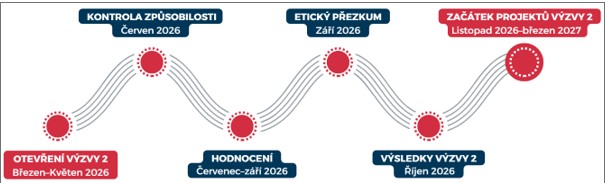
-
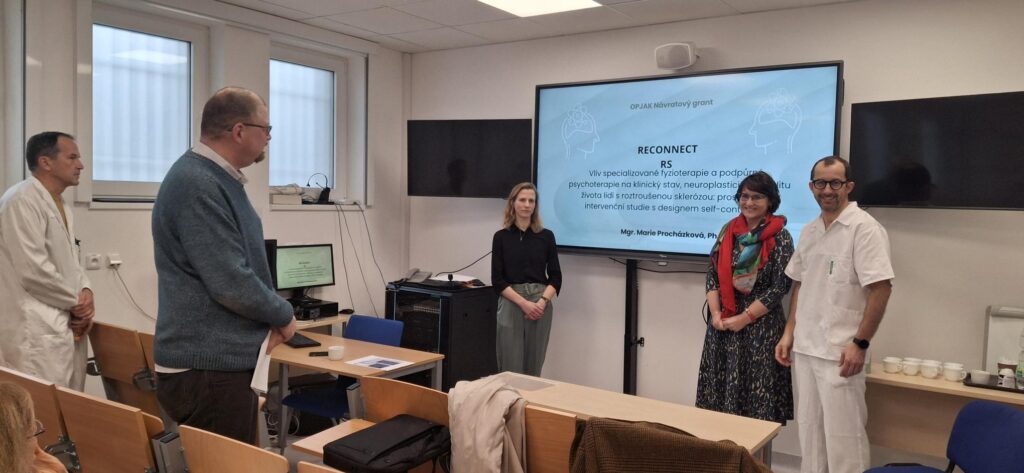
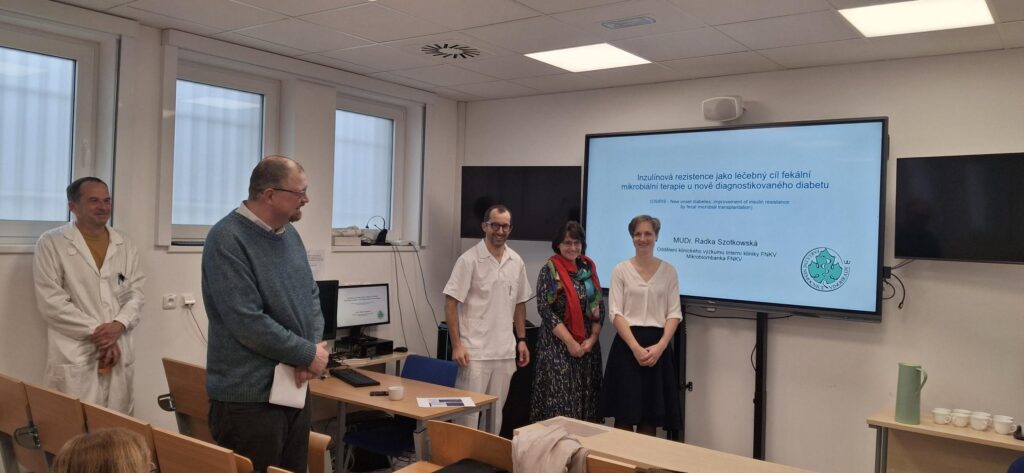
The FNKV Research Committee approved two project proposals submitted to the Return Grants competition
On Monday, February 9, 2026, the KVUH Research Committee held a meeting. The main item on the agenda was the presentation and approval of project proposals submitted to the Return Grants competition under the OP JAK call:
“Returns” – Support for R&D Staff After a Career Break (FNKV Returns)
Reg. No.: CZ.02.01.01/00/24_037/0013828KVUH is the only teaching hospital to have received this grant and can thus support the return of researchers to active scientific work following a career break caused by maternity, parental leave, long-term illness, or caregiving for loved ones.
The following researchers presented their project proposals:
👩⚕️ MUDr. Radka Szotkowská, Department of Internal Medicine, FNKV
Insulin resistance as a therapeutic target of fecal microbial therapy in newly diagnosed diabetes👩🔬 Mgr. Marie Procházková, Ph.D.,
The Impact of Specialized Physical Therapy and Supportive Psychotherapy on Clinical Status, Neuroplasticity, and Quality of Life in People with Multiple Sclerosis: A Prospective Interventional Study with a Self-Controlled DesignWe are delighted that the Science Committee has supported both submitted project proposals. Congratulations, and we look forward to further research results!

-
KVUH has joined the WHO project
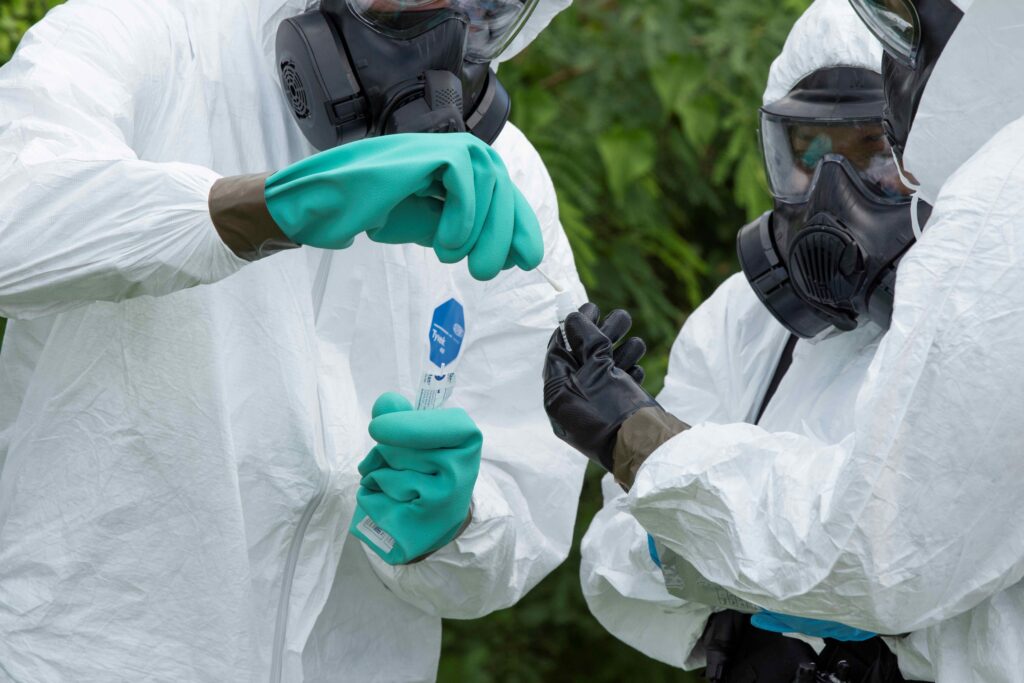
Královské Vinohrady University Hospital has joined a prestigious WHO project focused on crisis preparedness as a partner. From 2024 to 2027, it will actively participate in a nationwide program to strengthen the resilience of healthcare facilities against CBRN threats. Our teams undergo specialized training, and in response to the global security situation, we are involved in developing and testing new procedures, drawing on the expertise of international experts. Our goal is to always stay one step ahead and ensure maximum safety for our patients and staff in the event of any emergency.
photo: Airman First Class Mandy Foster